

Wetenschappelijk onderzoek toont aan dat klimaatverandering gaande is en dat menselijke activiteiten daarin een grote rol spelen [2]. Maar ondanks deze wetenschappelijke overeenstemming blijft klimaat(verandering) een ingewikkeld vraagstuk, waarin betrouwbare informatie en bewijs moeten opboksen tegen misinformatie, desinformatie en complottheorieën [3], [4], [5]. Dit alles gebeurt binnen een gepolariseerd media-ecosysteem, waarin sociale media-algoritmes emotionele (en soms misleidende) inhoud aanbieden [6], [7].
Dit vormt vooral een probleem als we bedenken dat klimaatverandering een thema is waarbij de informatie die we tegenkomen een grote impact op ons kan hebben. Dat komt doordat het onderwerp wereldwijd voor mensen relevant en voelbaar is, terwijl het tegelijkertijd enorm ingewikkeld is en vraagt om grote veranderingen in hoe we onze maatschappij inrichten. Onze feitelijke kennis over de vele aspecten ervan is bovendien vaak beperkt, waardoor we nog kwetsbaarder zijn voor onjuiste of misleidende informatie. In zo’n situatie kan nieuwe informatie ons sterk beïnvloeden. Daar komt ook nog eens bij dat sommige actoren duidelijke belangen hebben om twijfel te zaaien of beleid te vertragen, terwijl ontvangers informatie soms ook niet wíllen accepteren omdat deze bedreigend kan zijn of ingrijpende aanpassingen van hen vraagt.
Dit alles speelt zich niet enkel op sociale media of in discussies af. Nieuwsmedia, zoals journalistiek, kunnen eveneens misleiden; bijvoorbeeld door te veel aandacht te besteden aan de perspectieven van machtige politieke en economische actoren of klimaatsceptici die hun eigen agenda’s naar voren schuiven [8], [9]. Ten slotte kunnen zakelijke belangen (bijvoorbeeld in fossiele brandstoffen en andere niet-duurzame producten) zelfs de klimaatwetenschap vertroebelen en de integriteit van onze meest betrouwbare bron van kennis in gevaar brengen [10], [11], [12]. Om betrouwbare kennis over klimaatverandering in deze ingewikkelde informatieomgeving te vinden, is het daarom erg belangrijk om kritische informatievaardigheden te ontwikkelen. Daarbij hoort ook dat men leert letten op kenmerken van wetenschappelijke kwaliteit, zoals publicatie in peer-reviewed tijdschriften [13], duidelijkheid over methoden en data en de inbedding van bevindingen in bredere wetenschappelijke consensus.
We kunnen je geen eenduidig antwoord geven over welke bronnen al dan niet betrouwbaar zijn, maar je kan de volgende drie stappen wel ondernemen om informatie te controleren.
Stap 1: Wie is de boodschapper? Mediabronnen evalueren
In het huidige media-ecosysteem kan bijna iedereen hun mening delen via blogs, sociale media en andere participatieve vormen van digitale media [14], [15]. Dit heeft zo zijn voordelen: iedereen heeft een stem, waardoor niet enkel een selecte groep mensen in de maatschappij (politici, bedrijven, journalisten, etc.) hun boodschap kan brengen via bijvoorbeeld het nieuws. Tegelijkertijd betekent het ook dat onbetrouwbare (klimaat)informatie zich makkelijk kan verspreiden [4], [16]. Als lezer kan je de betrouwbaarheid van deze bronnen controleren door jezelf de volgende vragen te stellen:
Wie is de boodschapper? Klimaatwetenschappers en journalisten zijn gebonden aan ethische principes, waaronder de verplichting om kloppende informatie te delen [17], [18]. Andere boodschappers, zoals influencers, gebruikers van sociale media en bedrijven, hoeven zich niet aan dezelfde principes te houden. Wees skeptisch als je hun beweringen tot je neemt: ze kunnen waar zijn, maar ook misleidend.
Wie financiert deze boodschap? Sommige bronnen met klimaatinformatie worden gefinancierd door betrouwbare financieringsbronnen, zoals onderzoekssubsidies of overheidsfinanciering voor journalistiek (bijv. de Publieke Omroep), terwijl andere worden gefinancierd door bedrijven die een belang hebben bij een bepaald beeld van klimaatverandering. Bijvoorbeeld: de Amazon Sustainability Blog [19] promoot veel veelbelovende “klimaatoplossingen” en innovaties, terwijl het bedrijf zelf een enorme ecologische voetafdruk heeft, vooral in het Mondiale Zuiden [20]. Controleer wie de informatie heeft gefinancierd door te kijken naar de pagina “Over ons” (bijv. voor een website) of de verklaring “financiering” of “belangenverstrengeling” (bijv. voor een onderzoeksartikel). Wees extra voorzichtig wanneer er geen informatie over financiering wordt gegeven, omdat een gebrek aan transparantie het moeilijk maakt om mogelijke belangen of beïnvloeding te beoordelen.
Stap 2: Feiten of waardeoordelen? De aard van informatie controleren
Feiten of waardeoordelen? Het is ook belangrijk om te begrijpen of een bericht gebaseerd is op bewijs (bijv. onderzoeksartikelen, rapporten zoals die van het IPCC - het Intergovernmental Panel on Climate Change, een van de wereldwijd meest gezaghebbende wetenschappelijke organisaties op het gebied van klimaatverandering) of op minder betrouwbare bronnen (bijv. anekdotes, persoonlijke meningen, uitspraken gebaseerd op waarden in plaats van feiten). Controleer bij het tegenkomen van nieuwe klimaatinformatie hyperlinks, referentielijsten en andere vermeldingen van de bron van de informatie. Als er geen bronnen worden vermeld, wees dan voorzichtig: dit kan een teken zijn dat de informatie niet betrouwbaar is.
Omvat de boodschap de werkelijkheid? Veel communicatie over klimaatverandering in de media legt de nadruk op conflict en negativiteit (negativiteitsbias). Dat gebeurt omdat dit elementen zijn met hoge nieuwswaarde [21], [22]: ze trekken de aandacht van het publiek. Tegelijkertijd kan deze voortdurende focus ook tot vertekeningen leiden. Een gevolg is dat het langzame, structurele en opbouwende karakter van klimaatverandering zo minder zichtbaar wordt dan plotselinge conflicten of incidenten. Daardoor kan het beeld ontstaan dat de situatie zo slecht of zelfs uitzichtloos is, dat individuele actie of inzet toch geen verschil meer maakt. Maar dat maakt nog steeds wel uit. Bovendien raakt hierdoor vaak onderbelicht wat we individueel of samen wél kunnen doen, welke maatregelen worden genomen, en welke daarvan effectief blijken te zijn. Deze negativiteitsbias in nieuws is belangrijk om te herkennen, zeker omdat onderzoek laat zien dat een sterke focus op negatieve klimaatcommunicatie overweldigend kan zijn en ertoe kan leiden dat mensen zich juist van het onderwerp afkeren [23]. Daar komt bij dat mensen informatie vaak selectief opzoeken en interpreteren op manieren die aansluiten bij hun eigen overtuigingen en leefstijl. In de context van klimaatverandering kan dit ertoe leiden dat berichten die verandering noodzakelijk maken minder aandacht krijgen, terwijl informatie die het huidige gedrag bevestigt juist makkelijker wordt geaccepteerd.
Waar komt AI-genereerde informatie vandaan? Informatiebronnen evalueren is nog moeilijker geworden nu kunstmatige intelligentie ook een groeiende rol speelt in onze zoektocht naar klimaatinformatie. AI-tools, zoals ChatGPT, Claude en NotebookLM, gebruiken informatie van meerdere bronnen op het internet, maar de aard van deze bronnen is niet altijd duidelijk (en de door AI-gegenereerde antwoorden zijn niet altijd kloppend [24]). Omdat deze systemen putten uit grote hoeveelheden online materiaal, kunnen ook bronnen met klimaatsceptische of misleidende claims in de antwoorden terechtkomen. Om na te kijken of AI-gegenereerde klimaatinformatie betrouwbaar is, kan je prompts gebruiken waarmee je de bronnen kan zien die een AI-toepassing gebruikt (zie bijvoorbeeld Figuur 1). Vervolgens kan je dezelfde vragen als hierboven stellen over deze bronnen.
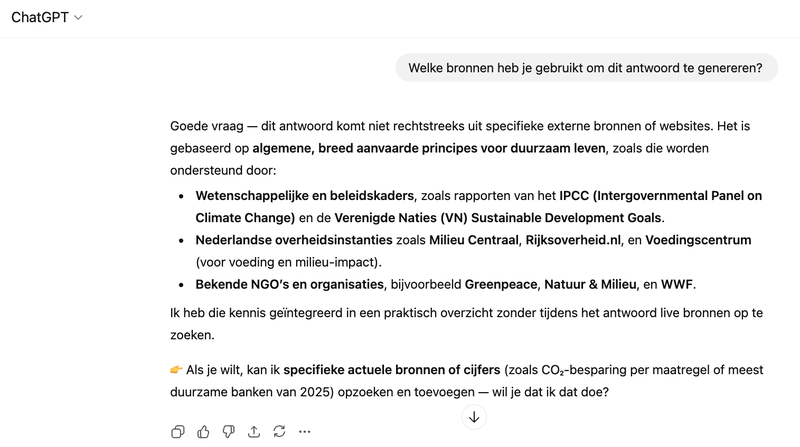
Figuur 1: Voorbeeld van een prompt voor het begrijpen van de AI informatiebronnen